

TMJ Therapy in White House, TN
Find Lasting Relief from Jaw Pain, Tension, and Headaches
If you wake up with jaw soreness, experience frequent headaches, or notice clicking sounds when you chew, you may be dealing with a condition known as TMJ disorder. At The Smile Center, we provide personalized TMJ Therapy to help patients find relief and restore healthy jaw function — without surgery or unnecessary discomfort.
Our team serves individuals from White House, Goodlettsville, Hendersonville, Portland, and Springfield, TN, using modern techniques to reduce strain on the jaw and prevent long-term damage to your bite and facial muscles.
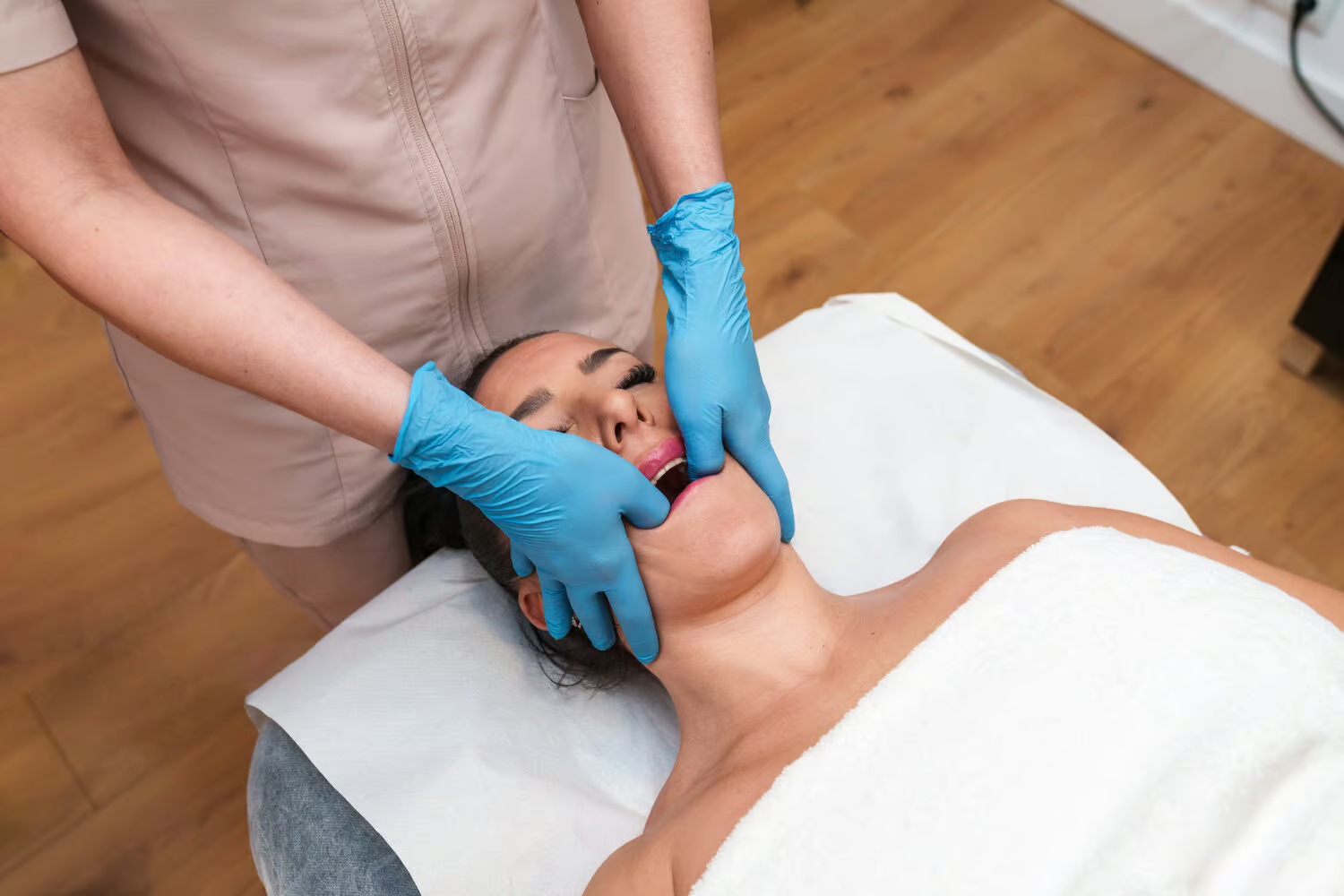
What Is TMJ Disorder?
The temporomandibular joint (TMJ) connects your lower jaw to your skull and plays a vital role in everyday activities like chewing, speaking, and yawning. When the joint becomes inflamed, misaligned, or overused, it can lead to a painful condition called temporomandibular joint disorder — or TMD.
Common causes include:
- Teeth grinding (bruxism)
- Jaw clenching due to stress
- Bite misalignment
- Arthritis or joint injury
- History of trauma to the jaw
Early diagnosis and intervention are key to preventing worsening symptoms or damage to the joint.
Symptoms of TMJ Disorder
TMJ issues can affect more than just your jaw. Many patients are surprised to learn that chronic headaches, neck stiffness, or even ear pain may be linked to this condition.
Signs you may benefit from TMJ Therapy include:
- Clicking, popping, or grinding sounds when opening or closing your mouth
- Jaw pain or soreness, especially in the morning or late in the day
- Frequent headaches or migraines
- Facial pain or pressure around the temples or cheeks
- Earaches or ringing in the ears (tinnitus)
- Difficulty opening your mouth fully or chewing
- Locking of the jaw
If you're experiencing any of these symptoms, our team can perform a thorough exam and create a treatment plan tailored to your needs.
TMJ Treatment Options at The Smile Center
At The Smile Center, we offer non-surgical, conservative treatment methods to ease joint strain and relieve discomfort. TMJ therapy often includes a combination of the following:
- Custom Nightguards – These oral appliances prevent clenching and grinding during sleep, helping to relax the jaw and reduce morning symptoms.
- Bite Adjustment – In some cases, minor modifications to the teeth can correct uneven bite pressure contributing to joint strain.
- Lifestyle Recommendations – We’ll advise on jaw-friendly habits, stretching exercises, and stress management techniques to support healing.
- Botox® Therapy – In select cases, Botox injections may be recommended to reduce muscle tension and provide longer-lasting relief.
- Follow-up Monitoring – Regular assessments ensure that your treatment plan remains effective as symptoms change.
For patients whose TMJ disorder is caused or worsened by nighttime grinding, we may also recommend complementary Bruxism Treatment to protect the teeth and muscles over time.
Comprehensive, Compassionate TMJ Care
Jaw pain can affect your daily comfort, sleep quality, and even your ability to enjoy meals. That’s why our team takes a personalized, empathetic approach to every case. Our goal is to reduce your pain and help you regain normal jaw function without invasive procedures.
All TMJ evaluations and treatments are overseen by Dr. Frederick L. Jones, Jr., who works alongside Dr. Brandie White-Ates and Dr. Gage Gregory to provide comprehensive, patient-focused care.
Frequently Asked Questions About TMJ Therapy
How is TMJ disorder diagnosed?
TMJ is diagnosed through a combination of patient history, physical examination, and imaging when necessary. We’ll evaluate jaw movement, tenderness, and alignment to determine if you have TMD.
Will my TMJ symptoms go away on their own?
Some mild TMJ symptoms may improve with rest and lifestyle changes, but persistent or worsening symptoms should be professionally evaluated to prevent long-term damage.
What is a nightguard, and how does it help?
A nightguard is a custom-molded oral appliance that fits over your teeth to prevent grinding and relieve jaw tension while you sleep. It also protects your enamel from wear.
Do you offer Botox treatment for TMJ?
Yes, in certain cases we may recommend Botox as part of your treatment plan. It helps relax the jaw muscles and reduce pain caused by overuse or tension.
Can TMJ disorder cause headaches?
Yes. TMJ tension can radiate through the head, neck, and shoulders, often triggering tension headaches or migraines.
Lorem ipsum dolor sit amet, consectetur adipiscing elit. Suspendisse varius enim in eros elementum tristique. Duis cursus, mi quis viverra ornare, eros dolor interdum nulla, ut commodo diam libero vitae erat. Aenean faucibus nibh et justo cursus id rutrum lorem imperdiet. Nunc ut sem vitae risus tristique posuere.
Schedule a TMJ Therapy Consultation Today
Don’t let jaw pain or frequent headaches disrupt your life. Find lasting relief with personalized TMJ Therapy at The Smile Center. Our team is here to help you restore comfort, balance, and function with treatment that fits your needs.